
Local SEO Services Philippines
Local SEO services in the Philippines help businesses become easier to find in Google Search, Google Maps, and location-based results when nearby customers are ready to call, visit, book, or request a quote.
I help local and service-based businesses strengthen their Google Business Profile, local landing pages, website relevance, citations, reviews, structured data, internal links, and performance tracking. The goal is not just more visibility. It is a clearer path from local search to a qualified inquiry.

What Is Local SEO?
Local SEO is the process of improving a business’s visibility for searches connected to a city, province, neighborhood, service area, or the searcher’s current location. It brings together the website, Google Business Profile, reviews, citations, local content, links, and technical signals so they support the same business information and customer journey.
Google explains that local results are mainly based on relevance, distance, and prominence. Relevance is how closely a business matches the search. Distance considers where the business or service area is in relation to the searcher. Prominence reflects how well known and credible the business appears online and offline. Distance cannot be optimized away, so a responsible campaign focuses on accurate information, relevant services, useful pages, genuine reputation signals, and a strong website.
Read Google’s official guidance on improving local ranking on Google.
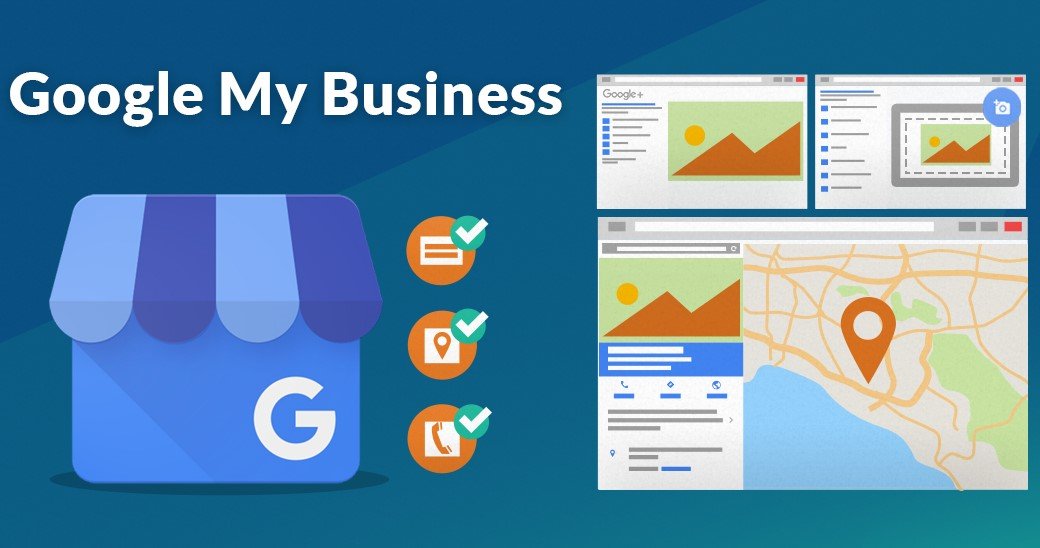
What Is Included in Local SEO Services?
Every campaign is adjusted to the business model, competition, current website condition, target locations, and available proof. The work may include the following areas.
Local SEO Audit
Review rankings, local competitors, landing pages, citations, reviews, profile strength, internal links, and conversion gaps.
Google Business Profile
Review categories, services, business information, photos, posts, reviews, landing-page links, and UTM tracking.
Local Keyword Research
Map commercial, service, city, province, neighborhood, and near-me intent to the right pages without keyword stuffing.
Local Landing Pages
Improve headings, copy, metadata, entities, proof, calls to action, internal links, images, and location relevance.
Citation and NAP Consistency
Review business name, address or service area, phone, website, hours, and key directory listings for accuracy.
Reviews and Reputation
Create a policy-conscious process for requesting genuine reviews, responding professionally, and learning from feedback.
Local Content Strategy
Plan service pages, location pages, FAQs, case studies, community proof, and supporting articles within a clear search silo.
Local Links and Mentions
Identify realistic opportunities through partners, chambers, associations, community organizations, sponsorships, and local publications.
Schema and Technical Alignment
Review crawlability, indexing, canonicals, redirects, mobile experience, page speed, entity data, Service schema, and breadcrumbs.
Tracking and Reporting
Connect rankings and visibility with calls, forms, bookings, directions, website clicks, and agreed business outcomes.
Local Keyword Research Should Produce a Clear Page Map
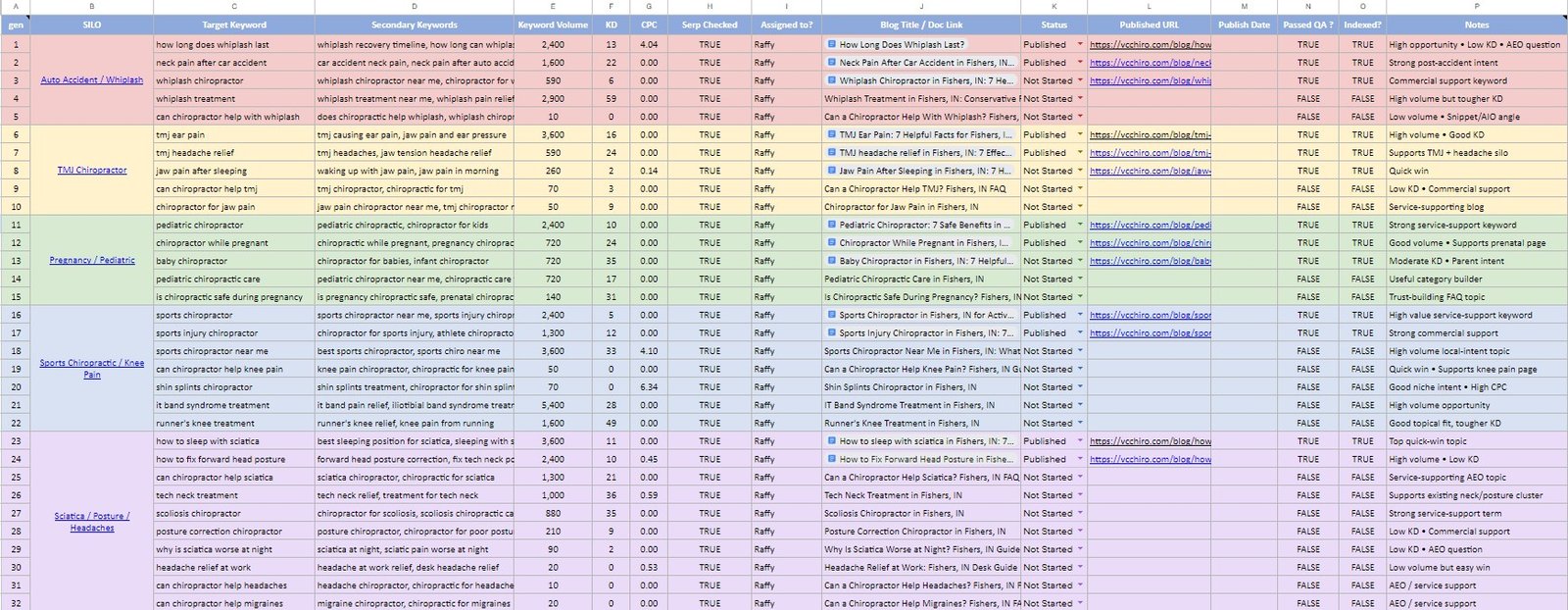
A keyword list is useful only when it guides decisions. I organize target terms by service, search intent, location, page type, priority, and the page that should rank. This helps prevent several pages from competing for the same query and makes internal linking more purposeful.
For a local campaign, the map can connect a main service page with legitimate location pages, supporting FAQs, related articles, Google Business Profile services, and conversion-focused pages. Search volume and keyword difficulty provide context, but business value, relevance, and the ability to satisfy the search matter just as much.
See how this connects with my broader SEO services in the Philippines.
How a Responsible Local SEO Strategy Supports Google’s Core Local Factors
Relevance
Accurate categories, clearly described services, relevant website pages, helpful local content, and consistent business information help search systems understand when the business matches a query.
Distance
Google considers the searcher’s location and the business location or legitimate service area. This factor cannot be guaranteed or manipulated through city-name repetition or false addresses.
Prominence
Genuine reviews, reputable mentions, links, strong organic visibility, complete business information, local proof, and real-world recognition can contribute to a more credible presence.
A Practical Local SEO Process
The work starts with evidence and priorities, then moves into implementation, measurement, and continuous improvement.
Audit
Review the website, Business Profile, rankings, citations, reviews, competitors, tracking, and lead flow.
Research
Identify local search intent, target services, legitimate locations, competitor gaps, and customer questions.
Page Mapping
Assign keyword clusters to the homepage, service pages, location pages, supporting content, and conversion pages.
Optimization
Improve approved profile fields, page content, metadata, internal links, citations, schema, images, and calls to action.
Local Authority
Build genuine reviews, useful local content, partnerships, citations, mentions, case studies, and community proof.
Measurement
Track visibility, calls, clicks, forms, bookings, leads, and next actions rather than reporting rankings alone.
Who Can Benefit From Local SEO?
Local SEO is suitable for eligible businesses that meet customers at a physical location, serve customers in person within a defined area, or operate legitimate branches. It is especially useful when revenue depends on calls, appointments, visits, bookings, quote requests, or local delivery.

Local SEO Reporting That Connects Visibility With Leads
Local rankings can vary by searcher location, device, query, and time. That is why reporting should use several signals instead of relying on one position.
- Google Search Console clicks, impressions, click-through rate, and query visibility
- Google Business Profile calls, website clicks, directions, bookings, and interactions
- Local map-grid visibility for agreed keywords and locations
- Organic sessions, landing-page engagement, forms, calls, and qualified leads
- Review growth, citation accuracy, indexed pages, and completed priority actions
Tools may include Google Search Console, GA4, Google Business Profile Performance, Rank Math, Screaming Frog, Semrush, Ahrefs, Looker Studio, and local rank-tracking platforms, depending on the project.
Hands-On SEO and Website Implementation
I combine local SEO strategy with hands-on WordPress and website development experience. This means recommendations can be connected to actual page structure, technical limitations, schema, forms, tracking, mobile design, and conversion flow.
Based in South Cotabato, I support businesses across the Philippines and selected international markets. My approach is practical, policy-conscious, and focused on clear priorities. I do not guarantee a number-one ranking because local results depend on competition, location, relevance, prominence, website quality, and the searcher’s context.
View my SEO and web development portfolio, or explore my technical SEO services.
Frequently Asked Questions About Local SEO Services Philippines
What is the difference between Local SEO and Google Business Profile optimization?
Google Business Profile optimization focuses on the listing shown in Google Search and Maps. Local SEO is broader. It also covers the website, location and service pages, citations, reviews, links, schema, internal linking, local content, and conversion tracking.
How long does Local SEO take to work?
Some corrections can be completed quickly, but meaningful visibility and lead growth usually take consistent work over several months. Timing depends on competition, location, current authority, website quality, profile condition, reviews, and the scope of the campaign.
Can you guarantee the number-one position in Google Maps?
No. A legitimate local SEO provider cannot guarantee a specific Maps position. Results vary because Google considers relevance, distance, prominence, competition, searcher location, and other contextual signals.
Do service-area businesses qualify for Google Business Profile?
Eligible service-area businesses generally need to make in-person contact with customers during stated hours. Online-only businesses are not eligible for a Business Profile. The profile should use accurate service areas and follow Google’s current eligibility and representation guidelines.
Does every city need its own landing page?
No. A location page should exist only when the business genuinely serves that area and can provide useful, unique information. Thin pages that simply swap city names create a poor experience and may compete with one another. Start with the locations that matter commercially and can be supported with real local detail.
What access is normally required?
Access depends on scope. It may include Google Business Profile manager access, WordPress, Google Search Console, GA4, Tag Manager, reporting tools, and accurate business information. Password sharing should be avoided when a secure user or manager invitation is available.
Make Your Business Easier to Find and Easier to Choose
Start with a practical review of your website, Google Business Profile, target locations, competitors, reviews, citations, and lead path. You will get a clearer view of the highest-impact Local SEO improvements for your business.